Insights / Digital twins
How much does a digital twin cost? What drives the price of a UK project
In short
- The cost of a digital twin is set by the question it answers, how many sites it covers, how detailed it looks and where its data comes from.
- A 2D floor plan with live data costs far less to build and run than a photo-real 3D environment. Pick the lowest fidelity that changes a decision.
- Data is often the biggest unknown. Existing systems need integration work, and new sensors need buying, fitting and maintaining.
- Running costs matter as much as the build. Budget for hosting, security, data, support and change.
- Phase it. A focused proof of concept on one site can be delivered in around eight weeks, and tells you what the full twin will cost.
A digital twin costs what its scope, fidelity and data make it cost. A twin of one building on a live floor plan, using sensors that are already there, is a small project. A photo-real 3D twin of a whole portfolio, fed by a dozen systems and used by hundreds of people, is a large one.
This guide covers what drives the price of a UK digital twin project and how to get a quote you can rely on. It does not publish prices, because a number without a scope is meaningless.
What question does the twin need to answer?
This is the biggest cost driver, and it is free to get right. A twin built to answer "which rooms are too warm right now?" needs temperature data on a plan. A twin built to answer "what happens to berth capacity if we add a crane?" needs simulation, a detailed model and operational data.
Vague briefs cost money. "A digital twin of the site" invites everyone to add their wish list, and the scope grows before anything is built. One operational question, asked by a named person every week, keeps the project tight. If you are still unsure whether you need a twin at all, read digital twin or dashboard? first. Sometimes the cheaper option is the right one.
Does it cover one site or a portfolio?
A twin of one building, one line or one quay is a contained piece of work. A portfolio twin multiplies most costs: more models to build, more data to connect, more sensors to fit, more people to train.
The second site is cheaper than the first. The platform, data pipeline and interface carry over. What repeats is the site-specific work: modelling the space, connecting its systems and installing hardware. Start with one site and you learn the real cost of that repeatable part.
How detailed does it need to look?
Fidelity runs on a scale, and each step up costs more to build and to run:
- live data in a list or chart
- live data on a 2D floor plan or schematic
- a simple 3D model
- a high-fidelity, real-time 3D environment
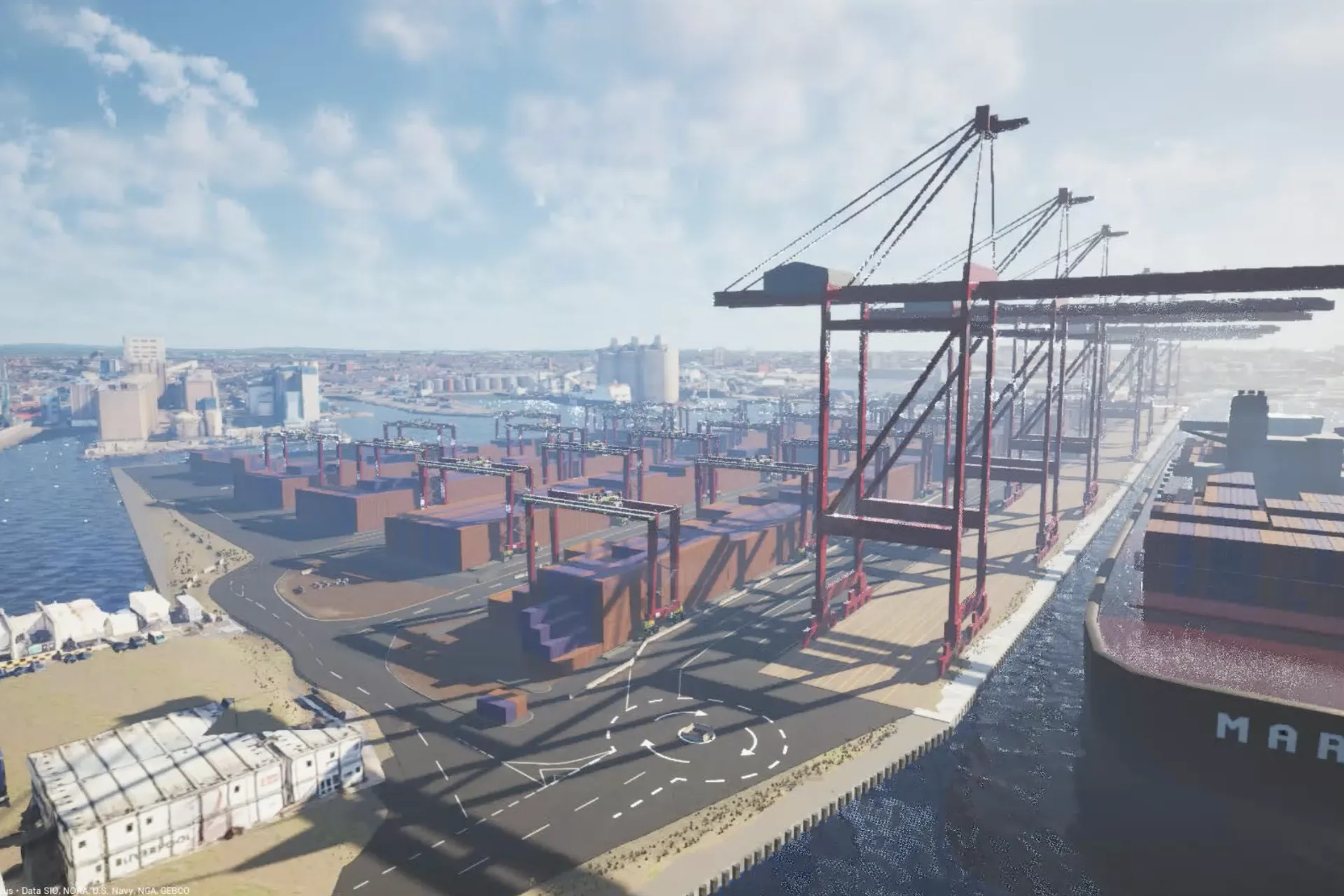
A floor plan with live data can be built from drawings you already have. A photo-real environment needs 3D modelling, a game engine and somewhere to run it. For Quay Twin we built a high-fidelity Unreal Engine dock and used custom pixel streaming so people in different cities could run it live from a browser, with no install and no powerful hardware. That was the right call for a twin shown to senior government and port authority stakeholders. It would be the wrong call for a facilities team checking room temperatures.
Choose the lowest fidelity that changes a decision. You can turn it up later.
Where will the data come from?
Data is where budgets most often go wrong, because it is hard to see from the outside.
Existing systems. If the data already lives in a building management system, a booking tool, an asset register or a supplier's portal, the cost is integration. That depends on whether the system has a usable API, how clean the data is and who owns access. A well-documented API is quick. An old system with no export can take weeks.
New sensors. If the data does not exist yet, you need hardware. That cost has three parts: the sensors, the install and the upkeep. Install is the part people underestimate. Running new power and data cable through a building is disruptive and expensive, and in older buildings it can damage the fabric.
Small battery-powered wireless sensors avoid most of that. They report over radio, and in a mesh network they relay each other's readings to a gateway, so you add relay points instead of drilling for cable. Battery life, reporting interval and replacement all affect running cost. Our guide to monitoring old buildings without rewiring covers what to check.
Reusing what is already there helps too. Before buying anything, list the sensors and systems the building already has and check whether their data can be read. TEO Sense, our own building platform, was built on that principle.
What does integration involve?
A twin is rarely a standalone product. It may need to send alerts to email or Teams, pull users from your identity system, push data to a reporting tool or trigger work orders. Each connection is a small project with its own testing.
List every system the twin needs to talk to, and which direction the data flows. That list is one of the most useful things you can give a supplier.
What does it cost to run?
The build is only part of the cost. Ask about these before you commit:
- Hosting. Cloud services for the data pipeline, storage and interface. Real-time 3D adds streaming servers, which cost more than a web dashboard. They run on GPUs, and NVIDIA Inception, which we joined in 2026, gives members preferred pricing on NVIDIA hardware.
- Data. Connectivity for gateways, data storage over time and any third-party data feeds.
- Security. Access control, encryption, monitoring and patching. Our Cyber Essentials guide covers the baseline. A twin often shows how a site works, so treat it as sensitive.
- Support. Someone has to fix things when a sensor goes quiet or a supplier changes an API.
- Change. Spaces change, teams change and questions change. Budget for the twin to change with them.
A twin nobody maintains drifts away from the real site. Then people stop trusting it.
How should a digital twin project be phased?
Phase it, so each step tells you what the next one costs.
Proof of concept. One site, one question, real data. A focused proof of concept can be delivered in around eight weeks. We took Quay Twin from an explainer video brief to a navigable twin in that time.
Pilot. Put it in front of the people who will use it every day. Fix what they do not use. Add the integrations that matter.
Scale. Roll out to more sites, now with a known cost per site and real evidence of value.
This also suits funders. Digital Catapult's Digital Twin Adoption Accelerator 2026 offered up to £100k of Innovate UK grant per project and the Digital Twin Industry Challenge Led Accelerator 2026 offered up to £75k each to up to 12 SMEs. The first closed on 6 September 2026 and the second on 27 October 2026, but they show the size of project funders back. SME manufacturers can also use Made Smarter, which offers up to 50% match funding capped at £20k. Our guide to funding a digital twin project covers the routes and what assessors look for.
How do I get a meaningful quote for a digital twin?
Give a supplier this, and the quote you get back will mean something:
- The question. One operational question, and who asks it.
- The site. Which building, line or asset first, with any drawings or plans you have.
- The users. Who will open the twin, how often and on what device.
- The fidelity. What the twin needs to show for that decision: numbers, a plan or a 3D model.
- The data. Systems you already have, what data they hold and whether they have an API.
- The gaps. Data you need that does not exist yet, and any limits on fitting sensors, such as listed status or no ceiling access.
- The connections. Systems the twin must send data to or receive data from.
- The rules. Security, data protection and hosting requirements from IT.
- The running model. Who will own and support it after launch.
- The phase. Whether you want a proof of concept first, and whether funding is involved.
Ask every supplier to price the proof of concept separately from the full build, and to state running costs as their own line. If a quote does not separate them, ask why.
If you want help shaping a twin before you price it, our digital twins team can scope a proof of concept on your real data. Get in touch with your question and your site, and we will tell you what it would take.
Common questions
How much does a digital twin cost in the UK?
There is no single price. Cost depends on the question the twin answers, the number of sites, the level of visual detail, the data sources and the running costs. A proof of concept on one site and one question is the most reliable way to size the full project.
What is the most expensive part of a digital twin?
It varies by project, but data is often the biggest unknown. Connecting existing systems and fitting new sensors can cost more than the model itself. High-fidelity 3D also adds significant build and running cost.
Can I get funding towards a digital twin?
Yes. Digital Catapult's adoption accelerator offered up to £100k of Innovate UK grant per project (closed for 2026), and Made Smarter offers SME manufacturers up to 50% match funding capped at £20k. Each scheme has its own eligibility rules.
How long does a digital twin proof of concept take?
A focused proof of concept, with one site, one question and real data, can be delivered in around eight weeks.