Insights / Digital twins
Digital twin or dashboard? How to tell which you need
In short
- A dashboard answers "what are the numbers?". A twin answers "where is it happening, and what if we change it?".
- If the question is about place, such as which room, which berth or which machine, a spatial view usually beats charts.
- Many problems are solved by a 2D floor plan with live data. Full 3D earns its cost when people need to plan, simulate or explain to others.
- Start with one operational question and real data on one site. Add fidelity only when it changes a decision.
- The best twin is the one people open every day, so design for the person who acts on it.
"We want a digital twin" is one of the most common briefs we hear, and one of the most expensive to get wrong. Sometimes a twin is exactly right. Sometimes a well-designed dashboard would solve the problem in a quarter of the time.
Here is how we help clients decide.
Start with the question
Write down the question someone in the operation asks every week. Then look at what kind of question it is.
| If the question is about | You probably need |
|---|---|
| How much, how many, trends over time | A dashboard |
| Where something is happening right now | A floor plan or map with live data |
| What happens if we change something | A twin with simulation |
| Explaining a place to people who are not there | A navigable 3D twin |
When a dashboard is enough
If people need totals, trends and exceptions, and location does not change what they do, a dashboard is faster to build and easier to use. Do not add 3D to make numbers look impressive.
When place matters
The moment the answer depends on location, such as which meeting room is too warm, which quay is congested or which line is down, a spatial view wins. People find problems faster when they can see them where they happen. (For what counts as too warm or too cold at work in the UK, see the guides on maximum and minimum workplace temperature.)
Often a 2D plan is enough. TEO Sense, our own building platform, shows every room on a live floor plan and a 3D twin, but most day-to-day decisions are made on the plan.
When full 3D earns its cost
3D is worth it when people need to:
- plan changes to a physical space, such as layouts, routes or capacity
- simulate scenarios before committing money
- explain a site to stakeholders, investors or government who will never visit it
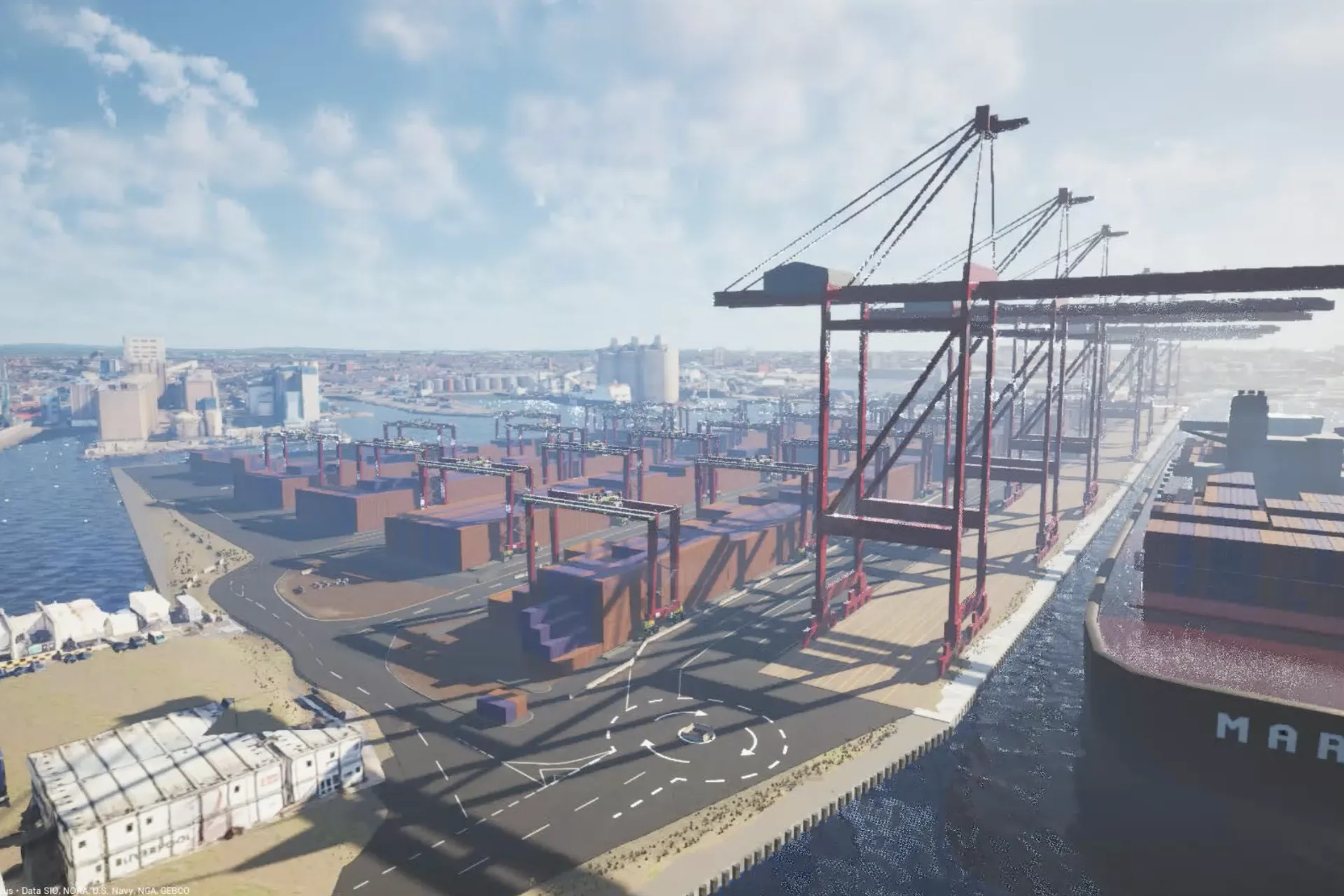
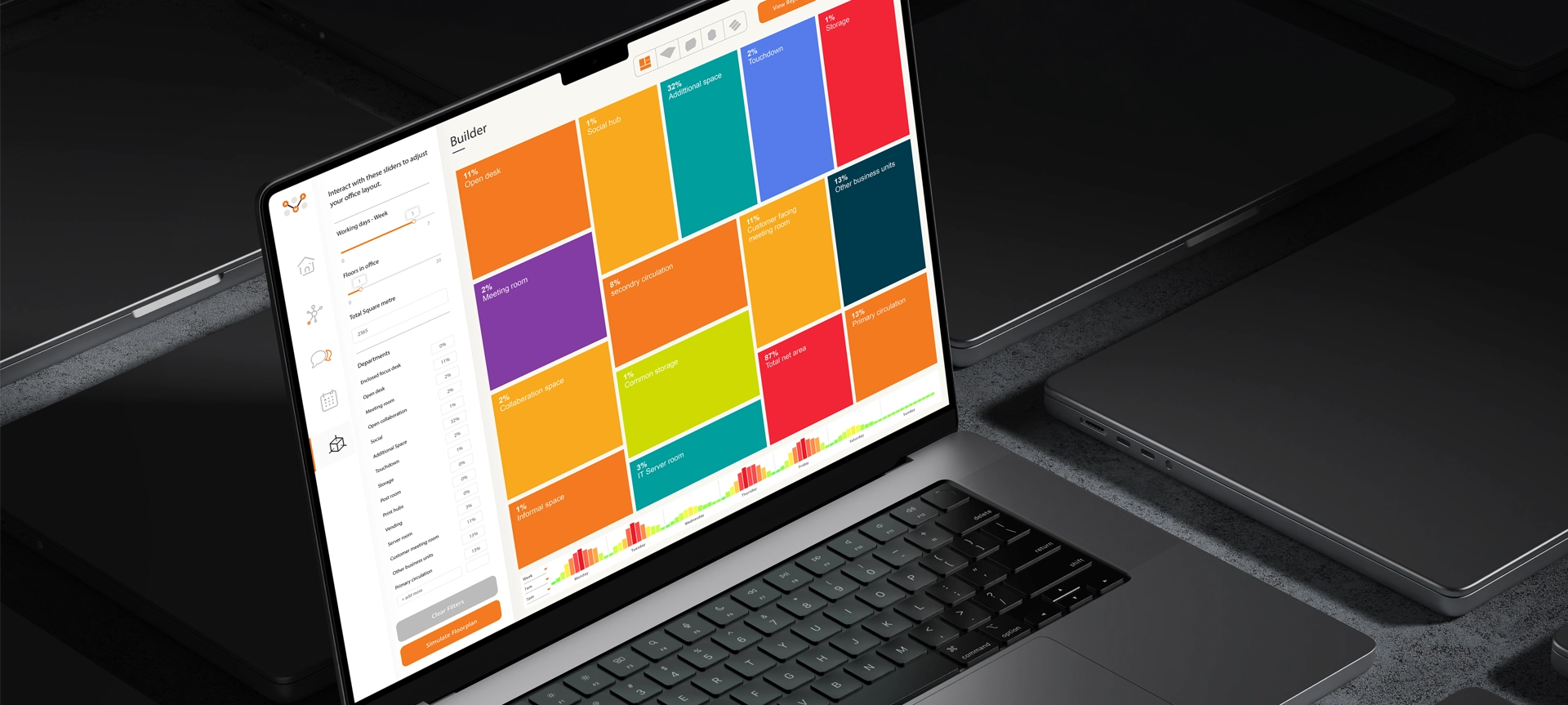
Quay Twin was built for that last reason: a navigable port twin shown to senior government and port authority leaders in Abu Dhabi. Streaming a scene like that to a browser runs on GPU servers, which is part of why we joined NVIDIA Inception. For Advanced Workplace Associates, 3D let organisations test office layouts before changing them.
Fidelity is a dial, not a switch
Start with the lowest fidelity that answers the question, then turn it up only when it changes a decision. A useful order is:
- live data in a list or chart
- data on a 2D plan
- a simple 3D model
- a high-fidelity, real-time 3D environment
Each step costs more to build and maintain. Make each one earn its place. Our guide to what a digital twin costs breaks this down.
Design for the person who acts
The twin that works is the one somebody opens every morning. Design the alerts, the handovers and the record of what was done, not just the model. If nobody owns an alert, the twin is a screensaver. The same goes for records: if you may need to show what a room's temperature was last month, read how to prove a room's temperature before you choose a system.
Thinking about a twin? Our digital twins team can build an eight-week proof of concept on your real data, and our guide to funding a digital twin covers how to pay for it.
Common questions
What is the difference between a digital twin and a dashboard?
A dashboard shows data as numbers and charts. A digital twin places live data on a model of the real place or asset, so people can see where something is happening and test changes before making them.
Does a digital twin have to be 3D?
No. Many effective twins are 2D floor plans or schematics with live data. 3D is worth it when spatial relationships, planning or stakeholder communication matter.
How do I start a digital twin project?
Pick one operational question, one site and your real data sources. Build a proof of concept in a few weeks, test it with the people who will use it, then decide what to scale.