Insights / AI
Putting AI into operations: start with the workflow, not the model
In short
- Start with a task people already do, repeatedly, that costs time or causes errors. Then ask whether AI can remove part of it.
- Good first uses are reading and sorting documents, drafting from structured data, and spotting exceptions in large volumes.
- Design the human step. Someone should be able to check, correct and approve what the AI produces.
- Measure time saved and errors avoided on the real task, not model accuracy in a demo.
- Keep data where it should be, and be clear with users what the tool does with it.
We get asked to "add AI" to products more than almost anything else. The projects that work all start the same way: with a task, not a model.
Find the task first
Sit with the people doing the work. Look for tasks that are:
- repeated, many times a day or week
- slow, because they involve reading, sorting or copying
- error-prone, because people are tired or the inputs are messy
- checkable, so a person can quickly tell if the output is right
That last point matters most. If nobody can check the output, nobody will trust it.
Good first uses
- Reading documents. Pulling key fields from contracts, certificates, invoices or reports into structured data.
- Sorting and routing. Reading incoming requests and sending them to the right person with a summary.
- Drafting. Writing first drafts of standard responses or reports from data you already hold.
- Spotting exceptions. Flagging the few readings, records or transactions that need a human look.
Design the human step
The interface matters as much as the model. For each output, show where it came from, make it easy to edit or reject, and require approval before anything leaves the business or changes a record. Log what was accepted and changed, because that is how the tool gets better. In a voice product the same rules apply to how the agent listens, speaks and recovers, which we cover in voice experience design.
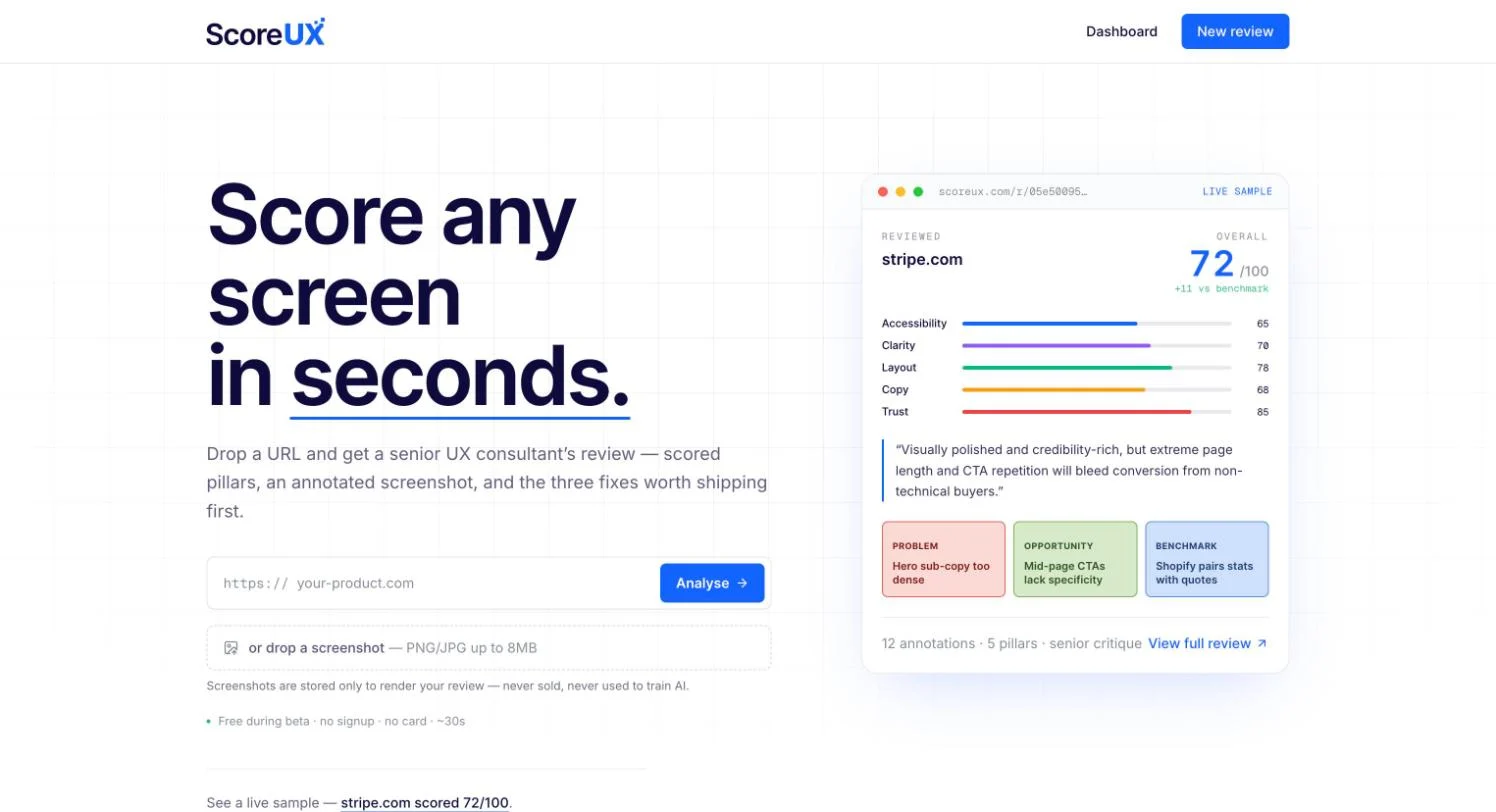
This is how we built ScoreUX: the AI produces a scored review with annotated notes, but the framework, the pillars and the way findings are shown were designed so a person can scan, challenge and act on them in minutes.
Measure the work, not the model
Model accuracy in a demo tells you little. Measure the real task before and after:
- time per task
- errors caught or missed
- how often people accept, edit or reject the output
- what happens downstream, such as fewer complaints or faster turnaround
Data and trust
Decide early where data lives, what goes to which model provider, and what is kept. Tell users plainly what the tool does with their data. The ICO's guidance on AI and data protection is a sensible starting point for UK businesses. For the security basics around it, such as MFA on every cloud service, see how we got Cyber Essentials.
Start small, then connect it up
Prove one workflow, then connect it to the systems around it. The value grows when AI output flows into the tools people already use, rather than living in a separate chat window.
If you have a task in mind, our AI and data team can scope and build a first version quickly. For AI businesses deploying into operations, the BridgeAI Deployment Catalyst may help fund it.
Common questions
Where should a business start with AI?
With a repetitive task that people already do and that costs time or causes errors, such as reading documents, sorting requests or drafting standard responses. Prove value there before anything bigger.
Do we need our own AI model?
Rarely. Most operational tools use existing models through an API, combined with your own data, rules and interface. The design of the workflow matters more than the model.
How do you keep a person in control of AI output?
Show the source behind each answer, make it easy to correct or reject, and require approval for anything that leaves the business or changes a record.